
Pagan weddings also known as handfastings are remarkable celebrations where a couple make heart-felt personal vows to each other and their hands are literally tied together in the presence of their family, friends or entire community. Pagan weddings are so much more than the standard “I Do” ceremony that most couples settle for. And, they definitely don’t have to carry the price tag of what you might call a standard wedding.
Standard weddings are just that. Standard. Everyone knows what’s coming next, and they are completely lacking in individuality, personal beliefs, personal choices, personal meanings and inclusions unique to the couple. Pagan weddings are full of symbolism, meaning, deeply spiritual and are rooted in ancient Celtic traditions.
The word handfasting simply means wedding in Neopaganism and is an historical term meaning wedding in Great Britain and Ireland. Historically, the location of the handfasting didn’t matter that much, and it certainly did not have to be in a church. The ceremony often took place in the largest space available, such as a tavern, or outside in orchards or most often at the bride’s home.
Whilst we don’t always know the facts about how our ancient ancestors lived, because most things were passed down in an oral rather then written tradition, we do know that handfastings continued in England until the marriage act of 1754, which was to stop ‘clandestine marriages’ by establishing the common laws of marriage as we know them today. We also know that the word knot or cnotte in Middle English has been used since the 1200s to describe the bond of wedlock.
Anyone can have a pagan wedding and if you are worried about offending people or putting your guests off coming, you might want to call it an alternative wedding and you can tailor the elements of your wedding with your Celebrant. I think you will agree that one of the best things about the pagan community is that we embrace inclusion in all its guises.
That brings me on to other aspects of a pagan wedding. Everyone gets involved in a big or a small way. The ceremony is at the heart of the wedding, and a full handfasting ceremony can last between 30 and 45 minutes. But its not boring. No-one will want it to end, especially the bride and groom, and guess what? You can have pre-wedding ceremonies such as a ring blessing, which is strictly for the bride and groom only, and is deeply moving and spiritual. And after the main ceremony you can have a jumping the broom ceremony and a cake and mead ceremony.
I often think that the many months of preparation and planning the couple put into a standard wedding that their actual ceremony doesn’t hit the spot. It’s over too fast and lacks true meaning. The bride and groom will say the same words that you say at a Civil Wedding, but that’s about 5 minutes of the entire ceremony. With the rest of the ceremony having much more depth and warmth.
A pagan celebrant is not a wedding planner, but they will lead you through the planning and preparation for the ceremony and gently steer you in the right direction through the consultation process to ensure you have the handfasting you long for.
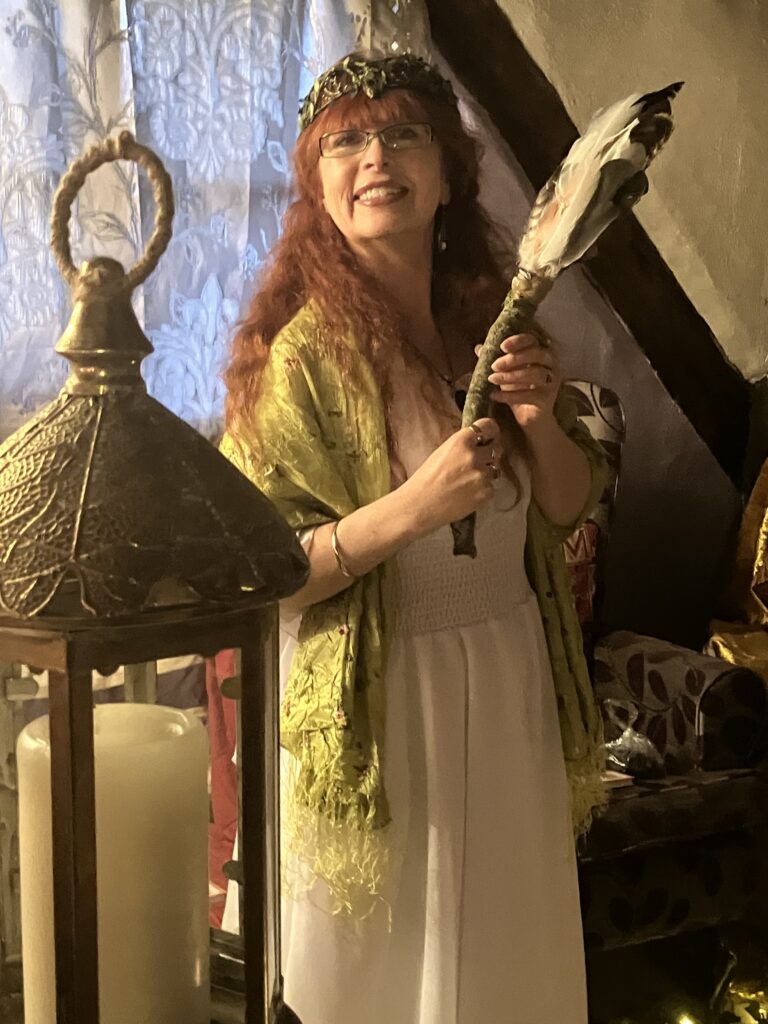
This blog was written by our very own Sacred Celebrant of Avalon, Kaz Nicholls, one of the practitioners and volunteers at The Cottage. Click here for contact information.